

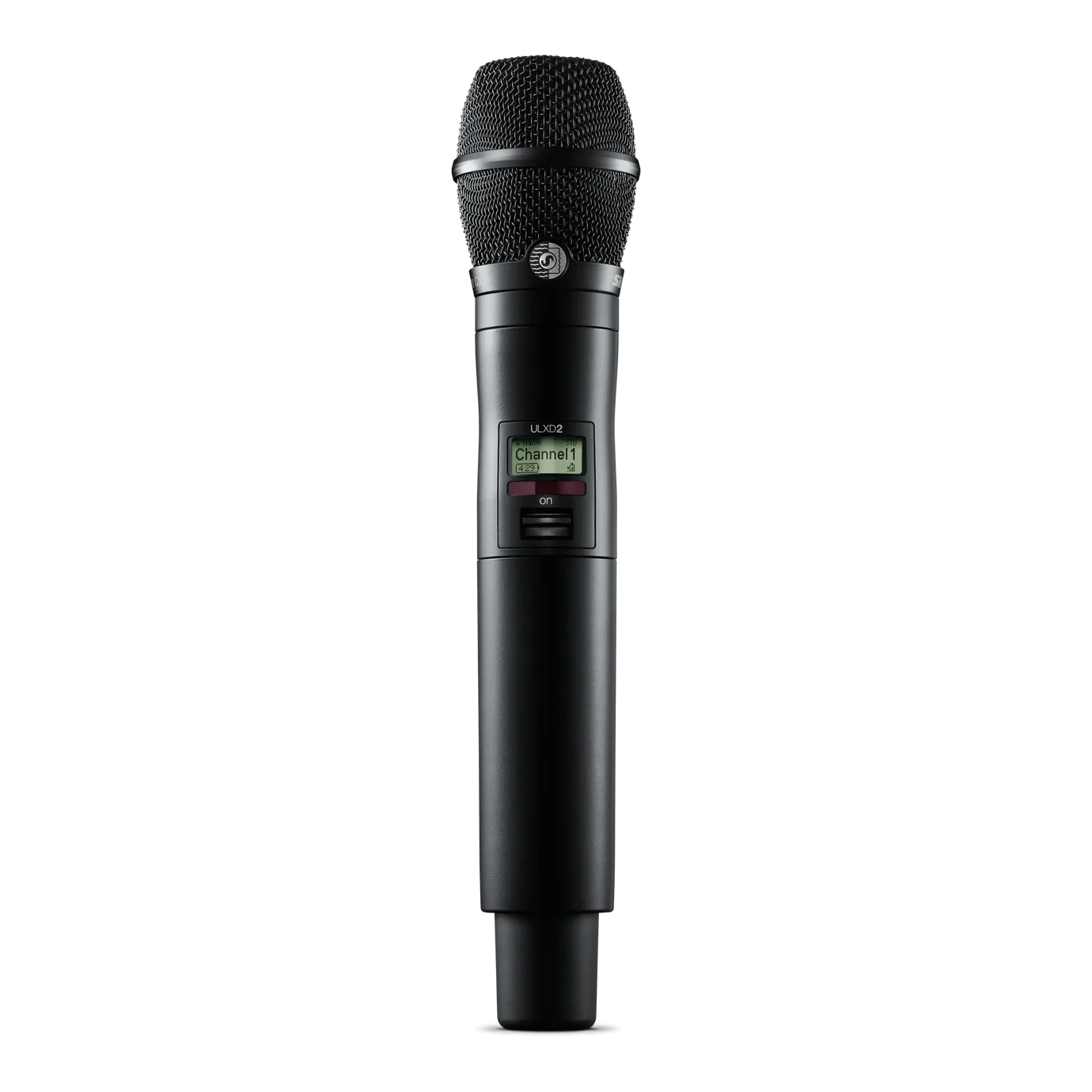
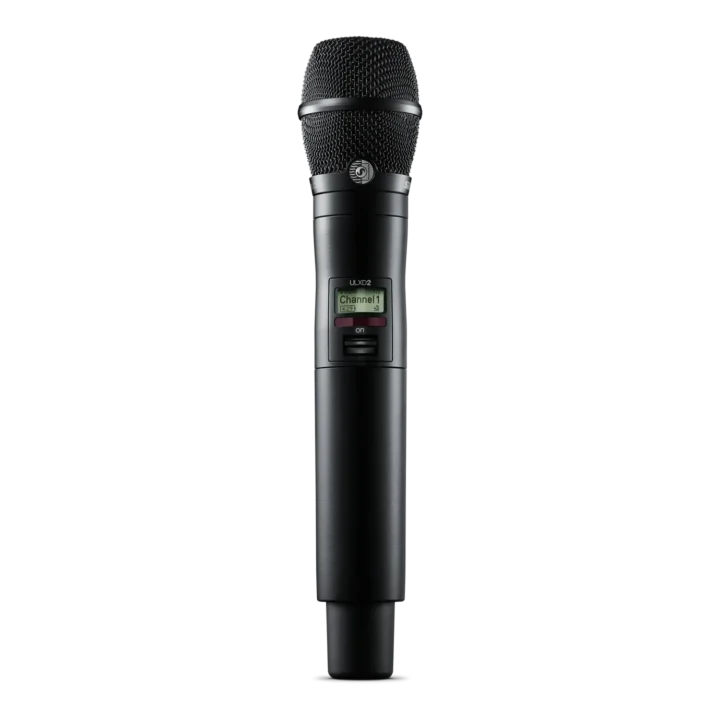
Shure ULXD2/K11 — Digital Handheld Wireless Transmitter with KSM11 Capsule
ULXD2/K11 Overview
The Shure ULXD2/K11 is a digital handheld wireless transmitter designed for use with Shure ULXD Digital Wireless Systems, operating in the G57 (470–608 MHz) frequency band. It ships with the KSM11 cardioid condenser capsule, delivering full low-frequency response, clear midrange, and high-end detail without requiring extensive EQ correction. Transmission is secured via AES 256-bit encryption, making it suitable for broadcast, houses of worship, touring, and corporate AV environments where signal integrity is critical. This transmitter is a reliable choice for audio engineers and system integrators building scalable ULXD wireless infrastructures.
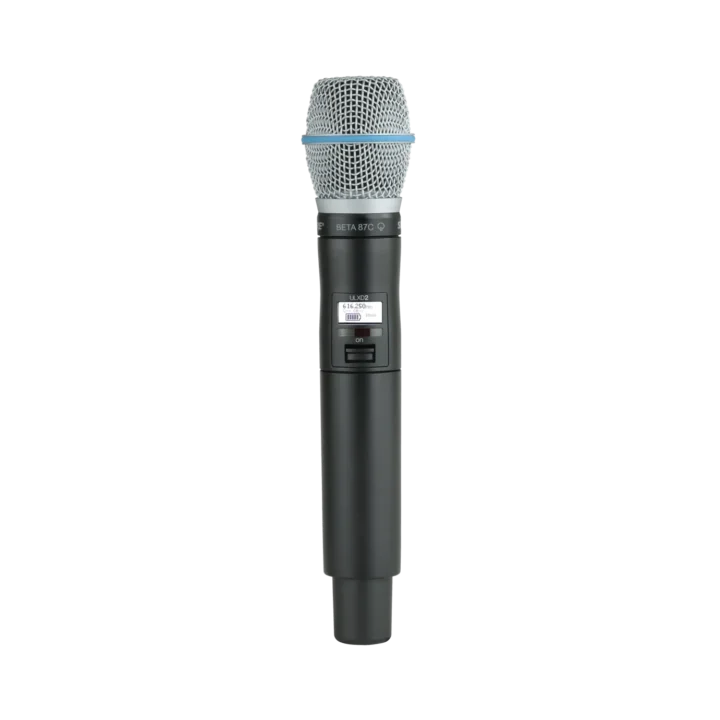
The interchangeable capsule design allows operators to swap to other compatible Shure capsules as application demands change, providing long-term flexibility across diverse production scenarios.
Key Features
- KSM11 Cardioid Condenser Capsule — Delivers full lows, clear mids, and high-end detail with minimal need for corrective EQ in live or broadcast applications
- AES 256-bit Encryption — Ensures secure RF transmission, protecting audio signals in sensitive or high-profile environments
- G57 Frequency Band (470–608 MHz) — Operates within a defined UHF range for coordinated multi-channel deployments
- ULXD System Compatibility — Fully integrated with Shure ULXD Digital Wireless receivers and infrastructure for seamless system-level operation
- Interchangeable Capsule Design — Accepts compatible Shure capsule heads, allowing the transmitter body to be repurposed across different microphone types and applications
- Digital Wireless Architecture — Provides the RF performance and audio fidelity expected in professional touring, broadcast, and installed sound environments
Technical Specifications
| Frequency Band | G57 (470–608 MHz) |
| Capsule | KSM11 Cardioid Condenser |
| Encryption | AES 256-bit |
| Compatible System | Shure ULXD Digital Wireless |


Reviews
There are no reviews yet.